SMM Panel: A Complete Guide to Architecture, Logic, and Operations
The digital marketing market often operates with abstract terms. What users colloquially call an "SMM Panel", engineers define as an API Request Routing Gateway.
For a student, a junior marketer, or a business owner, understanding this distinction is crucial. It separates those who blindly press buttons from those who understand the underlying mechanics of automation.
This guide analyzes the infrastructure: from the moment a request is created to its actual execution on the server layer.
1. What is an SMM Panel: Dual Definition
To truly understand the tool, we must separate the marketing interface from the technical reality.
The Surface Level (For the User)
An SMM Panel is a web-based marketplace where digital metrics (subscribers, views, interaction signals) are purchased in bulk. It functions like any e-commerce dashboard: you select a category, input a target link, and process a transaction.
The Core Level (For the Engineer)
Technically, an SMM Panel is a Control Plane connected via API (Application Programming Interface) to a network of execution servers. The panel does not "generate" the metrics itself. It acts as a dispatcher: it accepts your command, validates the budget, and routes the task to a server with available capacity.
In simple terms: Think of it as a logistics center. You submit a shipping order, and the system decides which truck (server) will transport your cargo (request) and which route it will take.
2. How It Works: Under the Hood
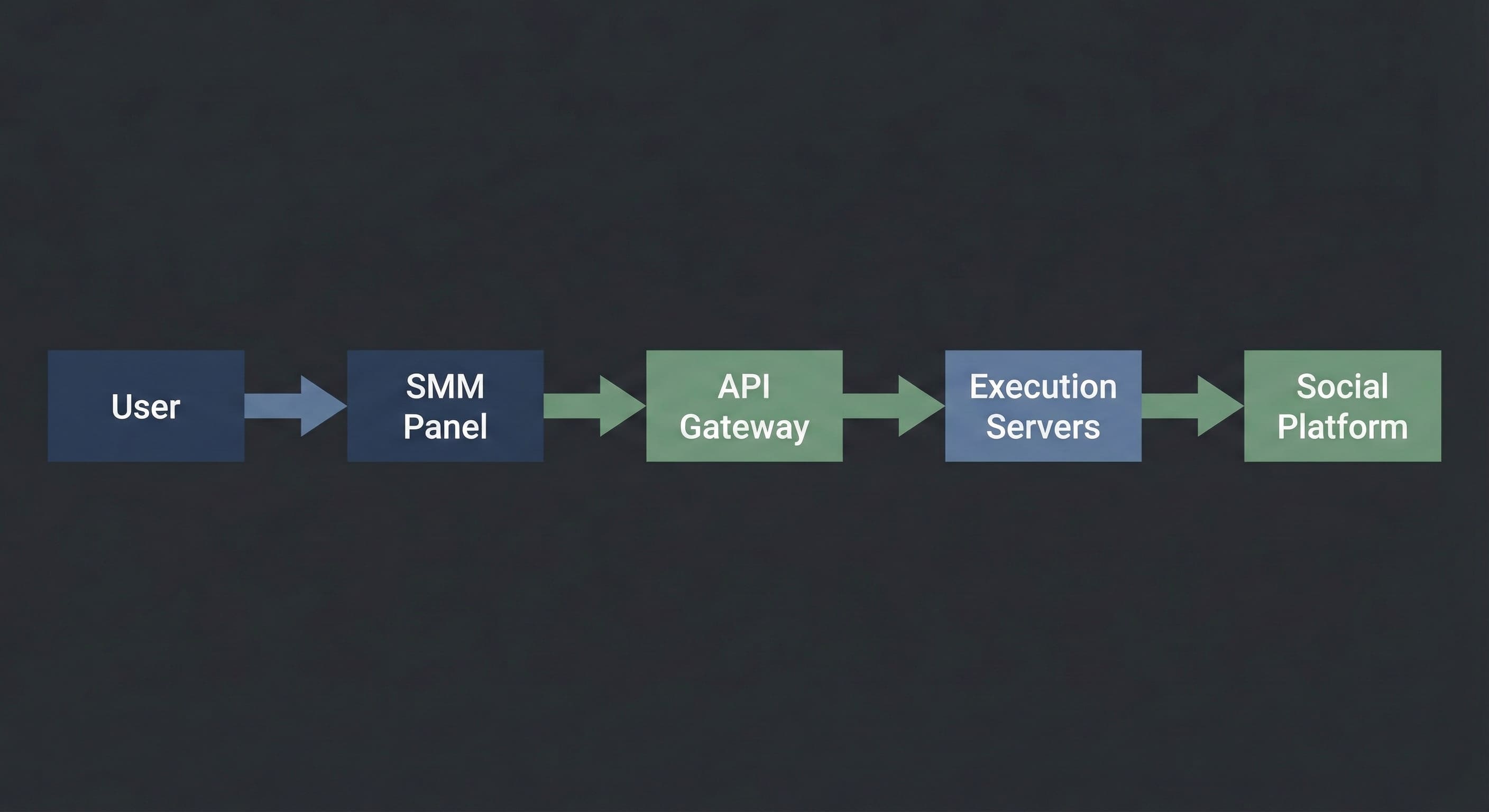
The execution process is a linear data transmission chain. It remains consistent regardless of the specific interface you use.
[How it looks to you]:
You select a service (e.g., "Telegram Views").
You paste the link to the post.
You specify the quantity (e.g., 1,000).
You click "Submit".
[What happens inside the system]:
Validation: The script checks if the link format is correct and if the user balance covers the transaction cost.
Routing: Your order is assigned a unique ID and transmitted to the API Gateway.
Queue: If the upstream server is available, processing begins immediately. If the server is under high load, the order enters a "Pending" state, waiting for a slot in the execution queue.
Execution: The server initiates the interaction signals according to the script.
Completion: The system receives a "Finished" signal and updates the status to "Completed".
Critical Note: This is not magic. It is a script. It executes exactly what you input. If you provide a broken link or a closed profile, the system may still attempt execution because it does not analyze context—it only processes code.
3. The Dictionary: Industry Terminology
To operate effectively, you must understand the technical vocabulary. Misunderstanding these parameters often leads to budget waste.
Start Time: The latency period before execution begins.
Instant: Processing starts within 0–5 minutes.
1h / 12h: The task is scheduled for a later window.
Speed (Throughput): The maximum number of actions the system can deliver per 24 hours.
Example: "Speed 5k/day" means the system will throttle delivery to 5,000 units daily to stay within safety thresholds.
Drop Rate: The percentage of metrics that may be removed by the social platform’s cleanup algorithms over time.
Refill / Non-Drop: A guarantee feature where the system automatically re-queues lost metrics to restore the original count.
Drip-Feed: A scheduling logic that splits one large order into multiple smaller batches.
Example: Instead of 1,000 likes at once, you configure "100 likes every 60 minutes". This smoothes the traffic curve to mimic organic behavior.
4. Market Hierarchy: The Supply Chain
The SMM market is structured like a wholesale supply chain. Knowing your position helps you avoid overpaying.
Providers (The Source): These entities own the physical hardware or the software logic that generates the signals. They operate via API only and rarely deal with retail customers.
Resellers (The Panels): These are platforms connected to Providers. They build the user interface, handle customer support, and curate the service list.
Note: Approximately 90% of panels on the market are resellers. This is standard. A high-quality reseller adds value by filtering out unstable servers and providing a single access point to multiple sources.
End Users (You): Agencies, freelancers, students, and businesses.
5. Why This Exists: Practical Use Cases
Beginners often mistake these tools for "vanity metrics." Professionals use them for specific infrastructure tasks.
A. Social Proof Engineering
User psychology is linear: people are more likely to follow a channel with 1,000 members than a channel with 5.
Goal: Establish a baseline visual authority to lower the barrier for organic subscriptions.
Tool: Initial population of counters (subscribers, views).
B. Reputation Management (ORM)
When a brand faces a targeted negative attack, positive or neutral signals can prevent reputational damage.
Goal: Balance visibility.
Tool: Routing positive signals to neutral comments to displace negativity from the top of the feed.
C. Hypothesis Testing (A/B Testing)
Media buyers often need to test ad creatives. To see if an ad performs, it sometimes needs "pre-heating."
Goal: Quickly validate if a creative can gain traction.
Tool: Automated interaction signals on ad posts.
6. Safety & Limits: How to Avoid Bans
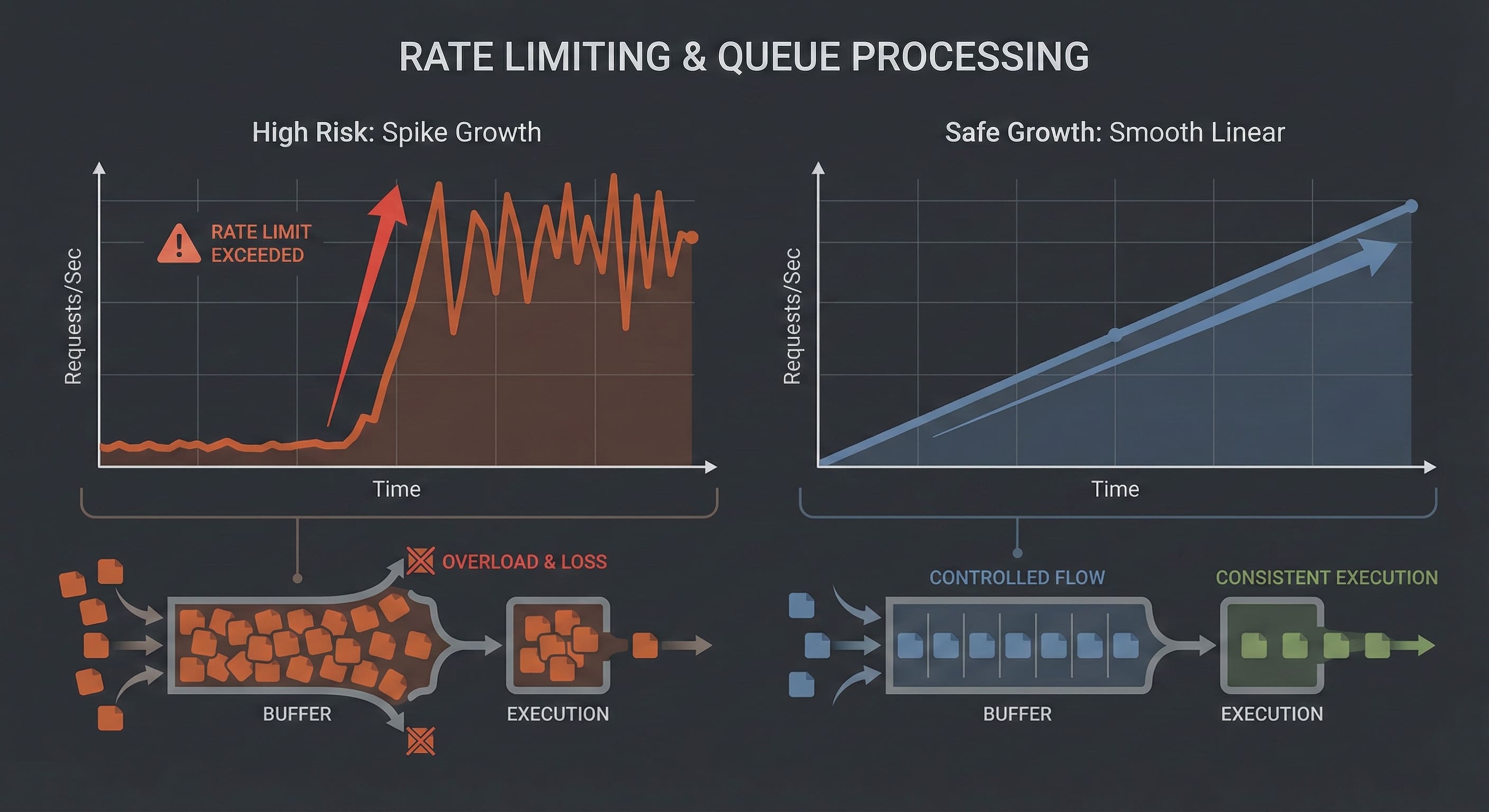
The biggest fear for new users is account suspension. It is important to understand: Platforms do not ban you for using a panel. They ban you for anomalous behavior.
Algorithms look for mathematical deviations, not the source of the traffic.
The Red Zone (Errors):
❌ Velocity Spikes: An account created yesterday suddenly gains 50,000 followers in one hour. This triggers automated flags. ❌ Empty Profiles: Traffic is directed to a profile with no avatar and no content. ❌ Metric Imbalance: A post has 10,000 likes but 0 views and 0 impressions. This is mathematically impossible in an organic environment.
The Green Zone (Best Practices):
✅ Smooth Curves: Use "Drip-Feed" or low-speed services. Growth should look linear, not vertical. ✅ Complexity: Mix different signal types. Likes should be 5–10% of Views. ✅ Gradual Scaling: Start small to test the platform’s reaction before scaling up.
The Golden Rule: Operations should remain within the plausible limits of human behavior. Slower is safer.
7. Troubleshooting: When Things Wait
Since this is technical infrastructure, latency and errors occur. This is operational reality.
Status "Pending" for a long time:
Cause: The server queue is full, or the upstream provider is undergoing maintenance.
Action: Wait. The system will either execute the order when capacity opens or cancel it and refund the balance.
Status "Partial":
Cause: The server delivered a portion of the request (e.g., 500 of 1,000) but could not complete the rest due to updated platform limits.
Action: You are charged only for the delivered amount. The remaining funds return to your balance. You can try a different server.
Status "Canceled":
Cause: Broken link, private profile, or geo-restrictions.
Action: Check your profile settings (it must be Public) and link format.
A Tool, Not Magic
An SMM Panel is a powerful automation utility. It removes manual labor, standardizes execution, and provides control over volume.
However, it has strict boundaries:
It provides Infrastructure, not Marketing Strategy.
It delivers Numbers, not Loyalty.
It is an Assistant, not a replacement for high-quality content.
Treat the panel like an engineer: read the technical descriptions, respect the rate limits, and always test on small volumes before deploying large-scale campaigns.