

 ENG
ENG
 RU (СНГ)
Telegram SMM Panel 2026: How to Choose a Reliable Provider
By 2026, the Telegram marketing automation market has transformed into a multi-level SaaS infrastructure. The search query "best SMM panel for Telegram" is technically incorrect because the market is decentralized. There is no single universal solution. Instead, there are specialized gateways for different tasks: from mass reach (Auto-Views) to precise reputation management (ORM) and behavioral factor adjustment.
To simplify: The "best" SMM panel is not a website with a nice design, but an architectural approach to selecting a provider. This guide covers the technical criteria used by professionals and agencies to select infrastructure.
Messenger algorithms have tightened filtration. Methods from 2020 (cheap bots without avatars) now result in an immediate "SCAM" tag on the channel or a shadowban. The industry is shifting towards HQ (High Quality) services and complex user behavior emulation algorithms.
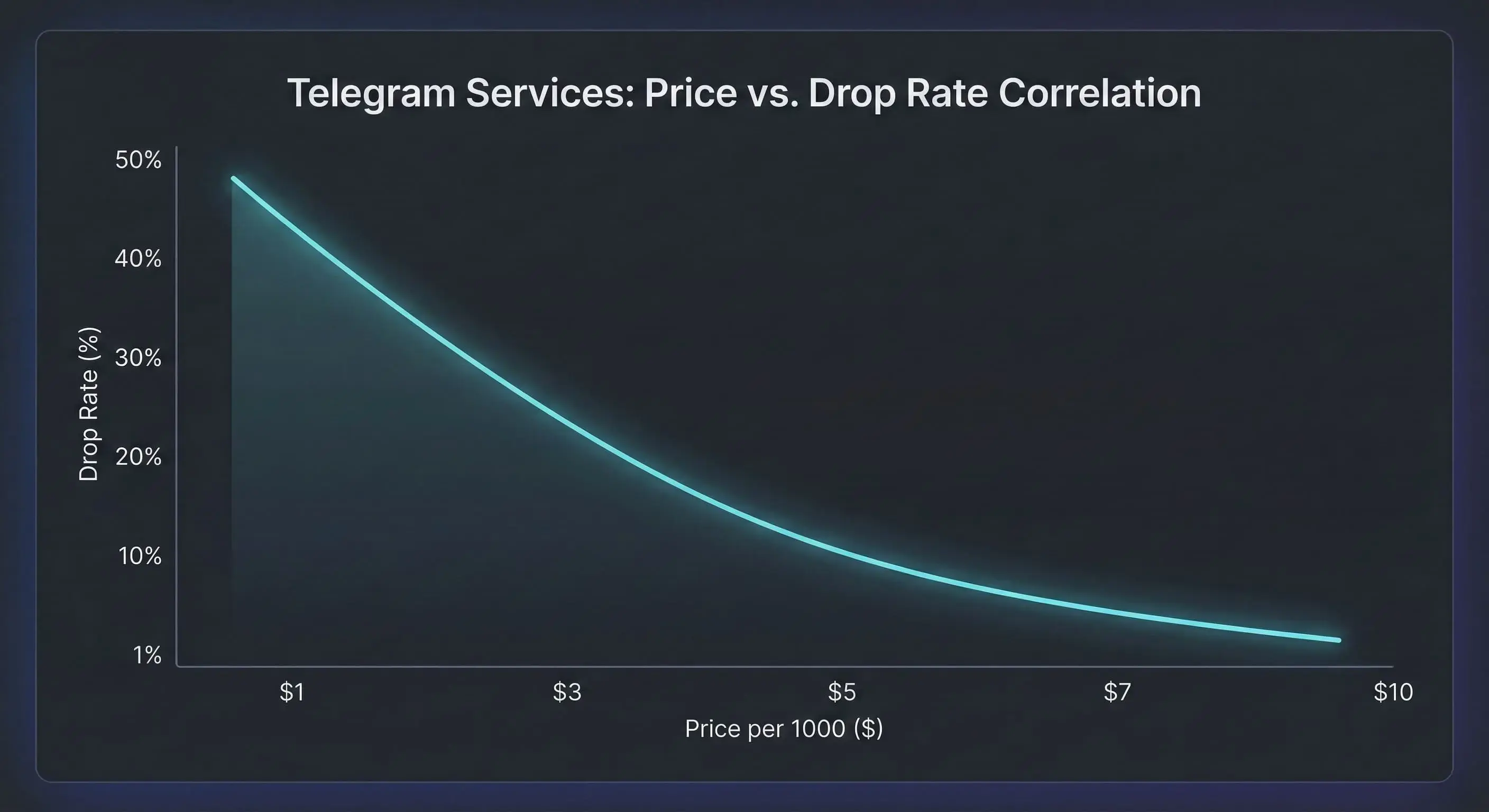
Briefly: Professionals evaluate a panel based on server Uptime, direct routes to Tier-1 providers, and the functionality of the Refill system. A low starting price often masks a high Drop Rate, making the final cost per contact higher than in the premium segment.
How to Choose an SMM Panel for Telegram in 2026: Market Architecture
Users often confuse the frontend (the website dashboard) with the backend (the service generator). A deep understanding of the hierarchy helps avoid overpaying intermediaries.
Table 1. Provider Hierarchy
| Level (Tier) | Description | Advantages | Risks |
|---|---|---|---|
| Tier-1 (Providers) | Owners of server capacity and account bases. They generate the service. | Lowest price, instant reaction to fixes, quality control. | Difficult to find, often work only via private API. |
| Tier-2 (Major Resellers) | Aggregators connected to multiple Tier-1 sources. They balance the load. | Huge assortment, single support point, stability (backup routes). | Small markup, dependent on Tier-1 uptime. |
| Tier-3 (Mass Market) | Resellers of resellers. Often just a script selling Tier-2 services. | Attractive marketing, convenient payment methods for individuals. | Double or triple markup, slow issue resolution, risk of shutdown. |
Difference Between Tier-1 and Standard Panels
The main difference is infrastructure control. A Tier-1 provider sees execution logs in real-time and can stop an order (Cancel) or restore drops (Refill) instantly. A Tier-3 reseller is forced to open a ticket with their supplier and wait days for a response. For serious tasks, choosing a Tier-2 aggregator with direct connections is the optimal balance of price and service stability.
Required Service Stack for Telegram (Technical Analysis)
The infrastructure of an SMM panel for Telegram must cover a range of tasks beyond the primitive "buy followers" request. Modern marketing requires complex activity simulation.
1. Subscribers: Quality Analysis
Categorization is based on Quality Tier and Geo-targeting.
| Service Type | Characteristics | Drop Rate (Unsubscribes) | Use Case |
|---|---|---|---|
| Low Quality (Bots) | No avatars, alphanumeric names (a34fgb), Datacenter IPs. | 80-100% (within 48h) | Testing, filling technical buffer channels. |
| Mixed / HQ | Avatars present, readable names, account age > 1 month. | 10-30% | Creating "mass" for launch, budget-friendly promotion. |
| Real / Active | Live profiles, activity history, Mobile IPs. | < 5% | Social Proof, supporting ad campaigns, improving Search Rank. |
Data indicates that using Low Quality bases is economically inefficient. Due to 100% drops, the service must be ordered 3-4 times. HQ and Real segments cost more upfront but are cheaper when calculated per "surviving" subscriber after one month.
2. Views and Auto-Views
Telegram calculates ER (Engagement Rate) based on views. A rigorous imbalance between subscribers and views is a direct signal of artificial growth.
Formula for a healthy ratio:
$$ ER_{norm} = 10\% \dots 20\% $$
Depending on the niche (e.g., news aggregators vs. specialized blogs), deviations are acceptable. However, a gap of more than 10x (100 views for 10,000 subscribers) is considered anomalous by algorithms.
Technical Selection Criteria (SaaS Metrics)
1. Speed and Drip-feed
The Drip-feed function allows splitting an order into smaller batches.
Example setup: Quantity: 1000 | Runs: 10 | Interval: 60 minutes.
Result: The system adds 100 subscribers every hour. This simulates natural viral growth and bypasses spam filters.
2. Refill System Guarantee
- R30 (Refill 30 Days): The restore button is active for 30 days.
- Auto-Refill: The system monitors the count and restores losses automatically. A sign of a Tier-1 service.
3. Order Status Transparency
Transparency is critical. A status of Partial means the service honestly completed part of the order and refunded the remainder, rather than keeping the order in "Pending" indefinitely.
Why Cheap Services Lead to Bans
Cheap services rely on server IP addresses (Datacenter IP). The Telegram anti-fraud system detects 1000 connections from a single subnet in one minute and flags the channel as suspicious. Premium panels use mobile proxies (4G/LTE) and rotate User-Agents, making the traffic indistinguishable from real users.
Top 7 Newcomer Mistakes
Analysis of support tickets reveals typical patterns that lead to financial loss:
- Ordering without Testing: Making a large deposit and launching an order for 10k subscribers without checking quality on a small batch (50-100).
- Ignoring Refill: Buying the cheapest "No Refill" service. Once drops occur, restoring the numbers is impossible.
- Hyper-speed at Launch: Adding 5000 subscribers to a channel created yesterday. This is a guaranteed SCAM tag.
- Blind Trust in Price: Buying a $0.10 service expecting $1.00 quality.
- Ignoring Views: Subscriber growth without view growth destroys channel statistics for advertisers.
- Private Channels: Trying to boost a private channel with a cheap service that only works with Public Links.
- Geo Mismatch: Ordering Arabic or Indian subscribers for an English-language channel (destroys behavioral factors).
Checklist: Panel Audit Before Deposit
- [ ] Domain Age: Check via Whois. Less than 6 months is a risk factor.
- [ ] Refund Policy: Clear terms regarding refunds.
- [ ] Test Order: Ability to purchase a minimum lot.
- [ ] API Documentation: Availability of docs for developers.
- [ ] Service List: Presence of items labeled "Non-Drop", "Refill", "HQ".
Conclusion
The concept of the "best SMM panel for Telegram" is transforming into "reliable infrastructure partner." The market is moving away from chaotic growth towards systematic reputation management. After selecting a technical partner, the logical next step is a test scenario: a minimum deposit, speed check on a test channel, and measurement of the Real Drop Rate.
FAQ
How do I identify HQ (High Quality) subscribers?
HQ accounts have set avatars, meaningful names (not random letters), a Bio, and an account age often exceeding 1-3 months. The Drop Rate for HQ services usually does not exceed 5-10%.
Which is safer: Subscribers or Views?
Views are technically safer. They do not require "subscribing" to the channel and leave no obvious traces in the member list. Sudden subscriber growth is always more suspicious to algorithms than a spike in reach (which can be attributed to reposts).
Can I use an SMM panel on a new channel?
Yes, but with caution. The channel should age for at least 1-2 weeks. Use the Drip-feed strategy: add no more than 50-100 subscribers per day while simultaneously publishing content.
When does Telegram delete bots?
Typically, the first drops occur within 24-48 hours after delivery. However, Telegram conducts global "Ban Waves" every few months, during which even old inactive accounts may be removed.
What is more dangerous: Sudden Growth or High Drop Rate?
Sudden growth is dangerous in the moment (ban risk). High Drop Rate is dangerous in the long term (loss of trust from audience and advertisers when the counter constantly "melts").
What does "Start Time: 0-1h" mean?
This is the time from payment to the appearance of the first subscriber/view. It is not the completion time for the entire order. Delays are often related to the queue on the Tier-1 provider's server.
Note: This analysis is based on open data and market observations. Telegram does not publicly disclose the details of its anti-fraud algorithms. The analysis relies on technical monitoring of the SMM market and anonymized API request logs.