Safe SMM Panel Architecture: Algorithms, Risk Factors, and Ban Prevention (2026)
In 2026, social media algorithms no longer react solely to quantitative metrics. They now analyze behavioral patterns, growth Velocity, and Connectivity Scores. Any sharp deviation from a "standard" user profile triggers security protocols, ranging from shadowbans to permanent blocks. The market for SMM infrastructure has shifted: brute-force methods from 2019 are obsolete.
Resellers and agencies often search for a "magic solution," ignoring the technical reality. A safe SMM panel is not a marketing slogan; it is a specific configuration of server settings, proxy types, and database quality. Understanding this backend architecture reduces the probability of account loss from 90% to a statistical margin of error. SmmPanelUS operates as a SaaS infrastructure to provide these tools, but the strategy remains in the hands of the user.
Briefly: Absolute protection does not exist in the API market. Safety is the management of probabilities through Speed settings, Drip-feed delivery, and the selection of verified (HQ/Real) databases. Cheap services without guarantees (No Refill) always carry a higher risk coefficient.
Technical Architecture: High Risk vs. Safe Tier
The term "safety" in the context of API services is often technical. Risks are generated by the social network's algorithms, not the panel itself. The primary difference between a secure infrastructure and a mass-market tool lies in the quality of assets and the proxying method.
The table below compares technical implementations:
| Parameter | Mass Market (High Risk) | Safe Infrastructure (SaaS Tier) |
|---|---|---|
| IP Type | Datacenter IP (Cheap server proxies, often blacklisted) | Residential / Mobile 4G Proxy (Simulates real user devices) |
| Account Age | 0-14 days (Newly registered) | 6+ months (Aged Accounts with history) |
| Profile Quality | Zero-post (Empty bio/avatar) | Filled bio, avatar, posts, stories |
| Start Speed | Instant (Causes velocity spikes) | Randomized Delay (0-1 hour) |
The myth of "100% ban protection" fails against the reality of code updates. Reliable infrastructure minimizes risks but does not control the moderation policy of external platforms.
Risk Calculation and Detection Math
Ignoring API limits and using Low Quality databases triggers automatic filters. Algorithms often use a variation of the Risk Factor formula:
$$Risk_{factor} = \frac{Artificial\_Activity}{Organic\_Baseline} \times Velocity$$
Here, Organic Baseline represents the account's historical activity, and Velocity is the speed of the incoming traffic. If the numerator increases while the denominator (the base audience) remains small, a flag is raised.
Sanction Types and Triggers
- Drops (Removals): The platform deletes bot accounts. Services marked "Non-Drop" or "R30" (Refill 30 days) include a recovery buffer, whereas cheap databases burn out completely.
- Shadowban: The account disappears from search results and the "Explore" page. This occurs when engagement metrics are unbalanced (e.g., 10,000 likes with only 50 reach).
- Action Block: A temporary restriction (24–72 hours). This is triggered by exceeding API limits (e.g., >60 actions per hour for a fresh account).
Identifying a Safe SMM Panel
Professionals analyze the technical specifications in the API documentation or service descriptions before placing orders.
1. Service Specifications (Specs)
A transparent service card lists technical limits:
- Start Time: A logical delay often indicates a managed queue rather than server overload.
- Speed/Day: Explicit daily limits (e.g., 500-1000/day) allow for precise load planning.
- Refill Button: The presence of an auto-refill function signals that the database is maintained and replenished.
2. Drip-feed Functionality
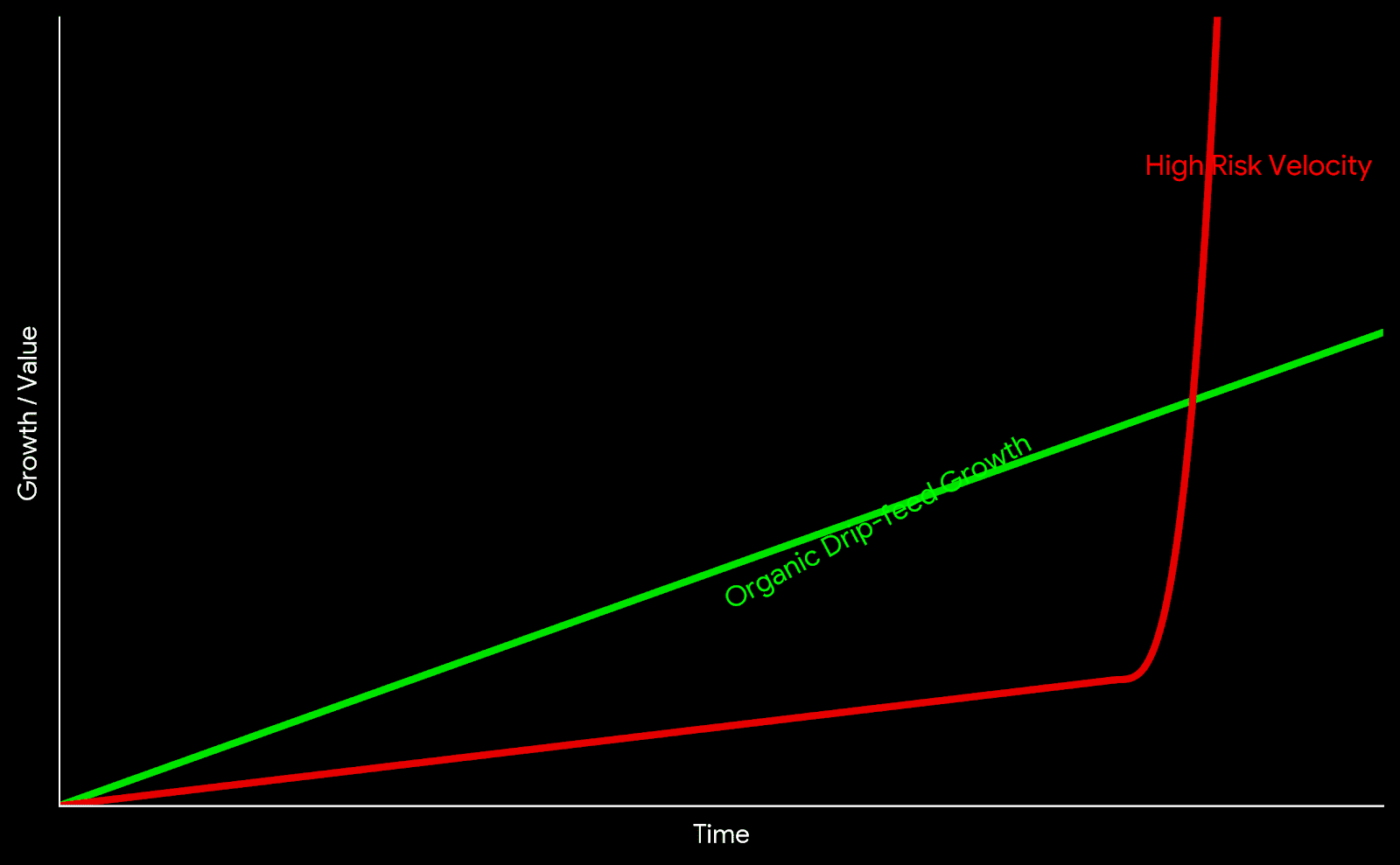
This feature is critical for safety. Drip-feed (Feature) breaks a large order into smaller micro-transactions (Advantage), smoothing the statistical graph to mimic a Natural Curve and bypassing velocity filters (Benefit).
3. Automated Refund Policy
Reliable infrastructure automates cancellations. If a social network update prevents delivery (Status: Partial), funds return to the balance. Systems that retain funds during failures indicate instability.
The Error Matrix: Why Accounts Fail
Analysis of support tickets shows that most issues stem from strategy, not the tool. Below are common patterns that lead to asset loss.
| User Action | Technical Consequence | Result |
|---|---|---|
| Ordering 10k followers on a 1-day old account | Velocity Spike of 5000% above baseline | Instant Ban or Drop |
| Buying the cheapest services ($0.001) | Usage of IPs from public blacklists | Action Block + Removal |
| Concurrent orders from 2-3 different panels | Counter conflicts and request overload | Partial Status, Money Loss, High Risk |
| Buying Likes without Reach/Impressions | Abnormal ER (Engagement Rate > 100%) | Shadowban (Algorithmic suppression) |
Risk Mitigation Protocols
Working with SMM infrastructure requires a systematic approach. Safety is the result of calculation.
The "Warm-up" Protocol
For new accounts (under 3 months), professionals apply a progressive load scale:
- Week 1: Organic posting, phone/email verification. Zero external services.
- Week 2: Drip-feed at minimum speed (20-50 units/day).
- Week 3: Increase limits to 100-200 units/day.
- Month 2+: Transition to standard operational volumes.
The Sandbox Method (Testing)
Experienced resellers maintain "Sandbox" accounts—test profiles used to verify Service IDs before applying them to main projects. If a Sandbox account receives an Action Block or a Drop, the service is marked as risky and excluded from Tier-1 campaigns.
Safety Checklist
- Service type verified as Real or HQ (Priority over Mixed/Bot).
- Refill guarantee active (30/60/365 days).
- Daily speed limits checked in description.
- Test order completed on a Sandbox account.
- Drip-feed configured (if available).
- Account has organic activity (posts, stories) prior to start.
Conclusion
Safety in SMM automation is dynamic. Platforms like SmmPanelUS provide access to global infrastructure, but the user defines the application strategy. Choosing services with guarantees (Refill), using Drip-feed to manage velocity, and avoiding the cheapest market options ($0.01 per 1k) form the foundation for stable operations.
FAQ
Can an account get permanently banned for SMM services?
Yes, if violations are systematic and the account receives "Spam Reports" from real users. Isolated limit breaches usually result in temporary Action Blocks or follower removal (Drops).
What is Drip-feed and why use it?
Drip-feed is an automation feature that splits a single order into multiple smaller deliveries (e.g., 50 likes every 30 minutes). This creates a natural growth curve that is harder for algorithms to detect.
Why are expensive services considered safer?
Higher costs typically reflect the maintenance of high-quality account databases (with avatars, posts, history) and the use of residential 4G proxies, which bypass standard anti-spam filters.